
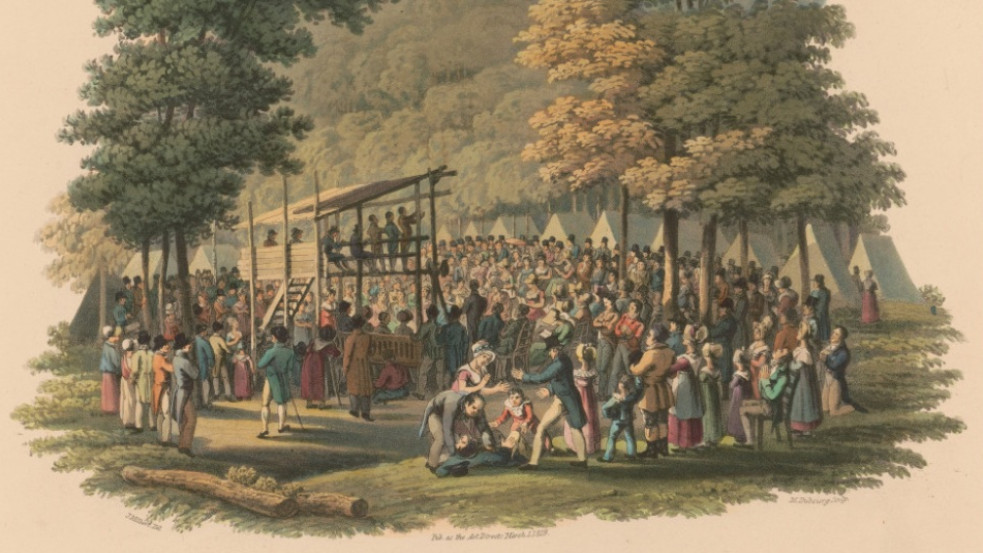
Ten days after His ascension, the Holy Spirit descended with great power upon the 120 disciples of Jesus Christ, according to Acts 2. The outpouring of God’s Spirit foretold by the prophet Joel was accompanied by numerous supernatural phenomena, among which the one we call speaking in tongues stands out for its novelty.
Glossolalia, that is, speaking in unknown languages (and its specific subtype, xenoglossia, when someone speaks in previously unknown human languages), appears several times in the Acts of the Apostles, and then the Apostle Paul incorporated this teaching into a theological system (primarily in 1 Corinthians). Although Paul expressed his desire that all believers speak in tongues, he predicted that a deviation from the apostolic teachings would soon begin, which affected, among other things, the charisms of the Holy Spirit.
In the second half of the first century, the apostles gradually handed the baton to their disciples, and the problems they had warned about in their letters soon began to emerge. But even in the second century, there were those who emphasized the power of the Holy Spirit. The martyr Justin testifies that prophecy and spiritual gifts were still active in the church. Irenaeus, for his part, writes: “We hear of many brothers in the Church who possess prophetic gifts and speak in all kinds of tongues through the Spirit…” (Against Heresies V.)
Perhaps the most famous of these is Montanus of Ardaba, after whom the Montanist movement was named.
With the help of Maximilla and Prisca, he began his work in Phrygia, Asia Minor, in the 2nd century. They were famous for prophesying and speaking in tongues while in a state of ecstasy, emphasizing the direct guidance of the Holy Spirit. The Roman authorities under Marcus Aurelius were not enthusiastic about the movement; the philosopher-emperor described the phenomenon as follows: “It confuses fickle and impressionable people with a superstitious fear of the divine.” What is more surprising is that by this time the Roman Church was already seeking reconciliation with the empire, so Montanus was declared a heretic in 170 (citing, among other things, that he gave women leadership roles in his movement and that he handled large sums of money).

Although the Carthaginian apologist Tertullian also regarded the workings of the Holy Spirit as natural (he discusses charismatic manifestations in his five-volume apologetic work *Against Marcion*), he initially attacked Montanus for subverting church order. However, after experiencing the power of the Holy Spirit, the renowned Christian writer himself joined Montanus’s movement toward the end of his life, a movement that openly embraced glossolalia as well.
As orthodoxy shifted toward an intertwining of power, the power of the Spirit was increasingly pushed into the background. Origen still writes about charisms in the 3rd century (in his work *Against Celsus*), but they are already a rarity. Novatian (who is also called the second antipope), however, who opposed orthodoxy, lists the charisms in his treatise on the Trinity and speaks of the Holy Spirit as one who raises up prophets even in the present and grants the gift of tongues to the church.
In the Montanist communities of Asia Minor and North Africa, speaking in tongues continued to be practiced, and in some later traditions concerning the Desert Fathers, we find stories according to which certain saints prayed in an unknown language, sang in the language of angels, or understood foreign languages in a supernatural way. For example, there are traditions regarding the 4th-century Egyptian hermit Pachomius (the father of cenobitic monasticism) that, although he had not studied Greek or Latin, through his charismatic gift he was able to speak these languages and understand foreign visitors. Similarly, the Syrian Church Father Ephrem professed a supernatural knowledge of foreign languages, which he considered one of the primary tools of mission.
Following the work of theologians such as John Chrysostom and Augustine of Hippo, a theology developed in both the Western and Eastern branches of Christianity (which we later came to call “cessationism” in its more fully developed form within Protestantism), according to which the spectacular work of the Holy Spirit, and thus especially speaking in tongues, served only to launch the early church but has since ceased. According to Chrysostom, glossolalia is a “vague matter” (29. Homily as a commentary on 1 Cor 12), not because it is not real in the Bible, but because, in his view, by his time it had largely fallen out of practice.
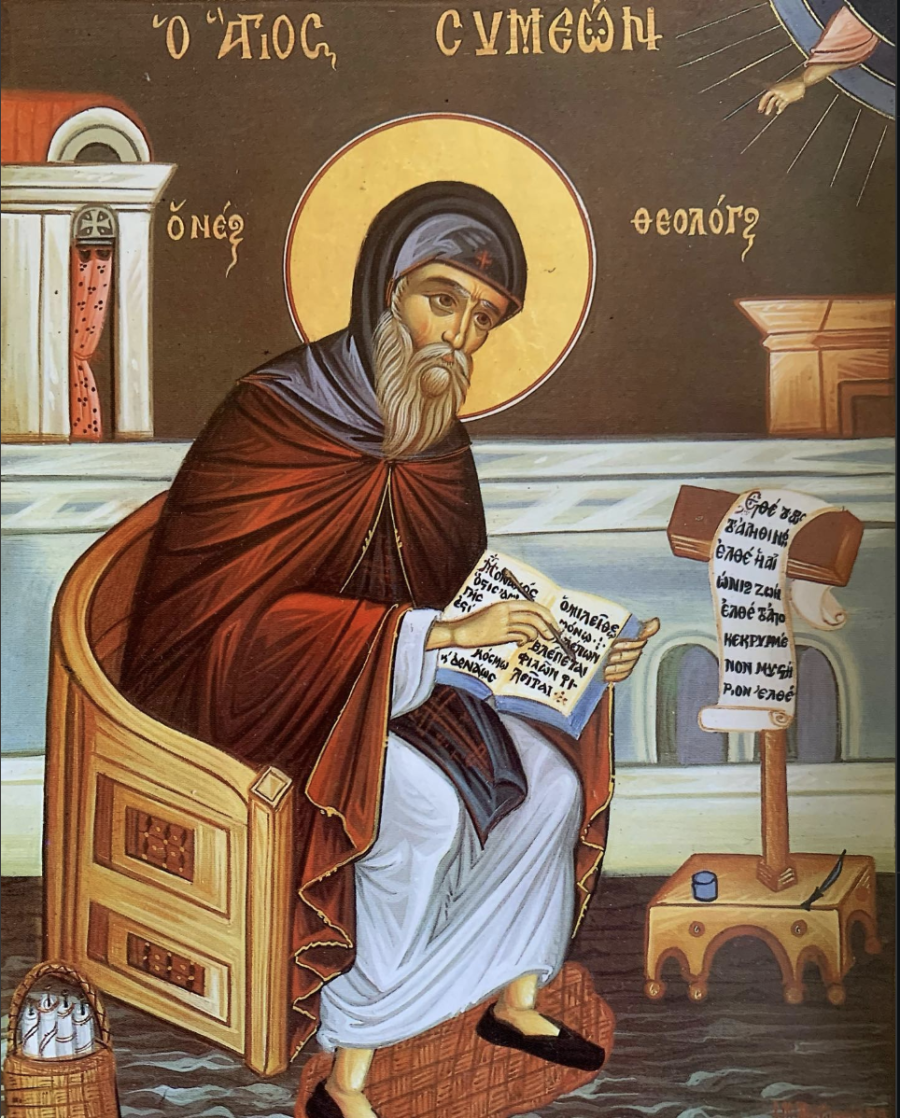
Nevertheless, we find notable exceptions. In the 4th century, Hilary of Poitiers regarded glossolalia as one of the special gifts of the Holy Spirit. He taught that it is a supernatural ability confirming God’s presence and authenticity, whose purpose is to demonstrate the presence of the Holy Spirit. Gregory of Nazianzus taught in Cappadocia that speaking in tongues is a language of deep, mystical communication with God and of praise to God, which serves the edification of the Church.
In the 5th century, Saint Patrick, the apostle of Ireland, described his own mystical experiences in his *Confessions* (*Confessio*), such as how the Spirit prayed within him using words he himself did not understand, yet he felt a supernatural presence in his heart. In the 6th century, although Pope Gregory I believed in theory that the number of miracles had decreased, he notes in his writings that the gifts of speaking in tongues and prophecy continued to appear in mission territories and among certain monks. Among the monks of Gaza (in the correspondence between Barsanuphius and John), a wordless, mystical prayer of silence emerges, which, following the Apostle Paul, they identified as the “inexpressible groanings of the Spirit.”
When examining authentic historical facts, we see that, from the 7th century onward and for centuries thereafter, there are no truly reliable, documented cases of glossolalia in Western church history. Let us not forget that history is written by the victors, and this is precisely the period when the institutionalization of the imperial church reached its peak in Charlemagne’s court. If someone spoke in unintelligible tongues, it was not regarded as a gift of the Holy Spirit, but as demonic possession (demoniacus) and “treated” with exorcism. Therefore, in the sources, these cases—if they existed at all—have survived as Inquisition or demonological records, not as charismatic gifts.
This is why some have attempted a revisionist historiography. Stanley M. Burgess, for example, argued that missionaries active in Frankish territories and Flanders in the 7th century experienced miracles of xenoglossia, when preachers suddenly became able to speak in the languages of local tribes without having learned them. Some sources even saw charisma behind Cyril and Methodius’s exceptional linguistic skills.
Critics, however, argue that all of this stems from misinterpretations in Pentecostal-charismatic historiography.
It is difficult to establish the truth; the surviving facts currently lend themselves to a critical reading, but we must emphasize once again: in this era, charismatic manifestations were actively persecuted and suppressed, so it is no wonder that little written evidence has survived. We can assume, however, that earlier charismatic movements did not disappear without a trace during these centuries either.
The only area of the era where prayer transcending the rational mind could exist was solitary monastic mysticism, and it was particularly present in Eastern Christianity. The silence was perhaps broken by Saint Symeon, who lived at the turn of the millennium.
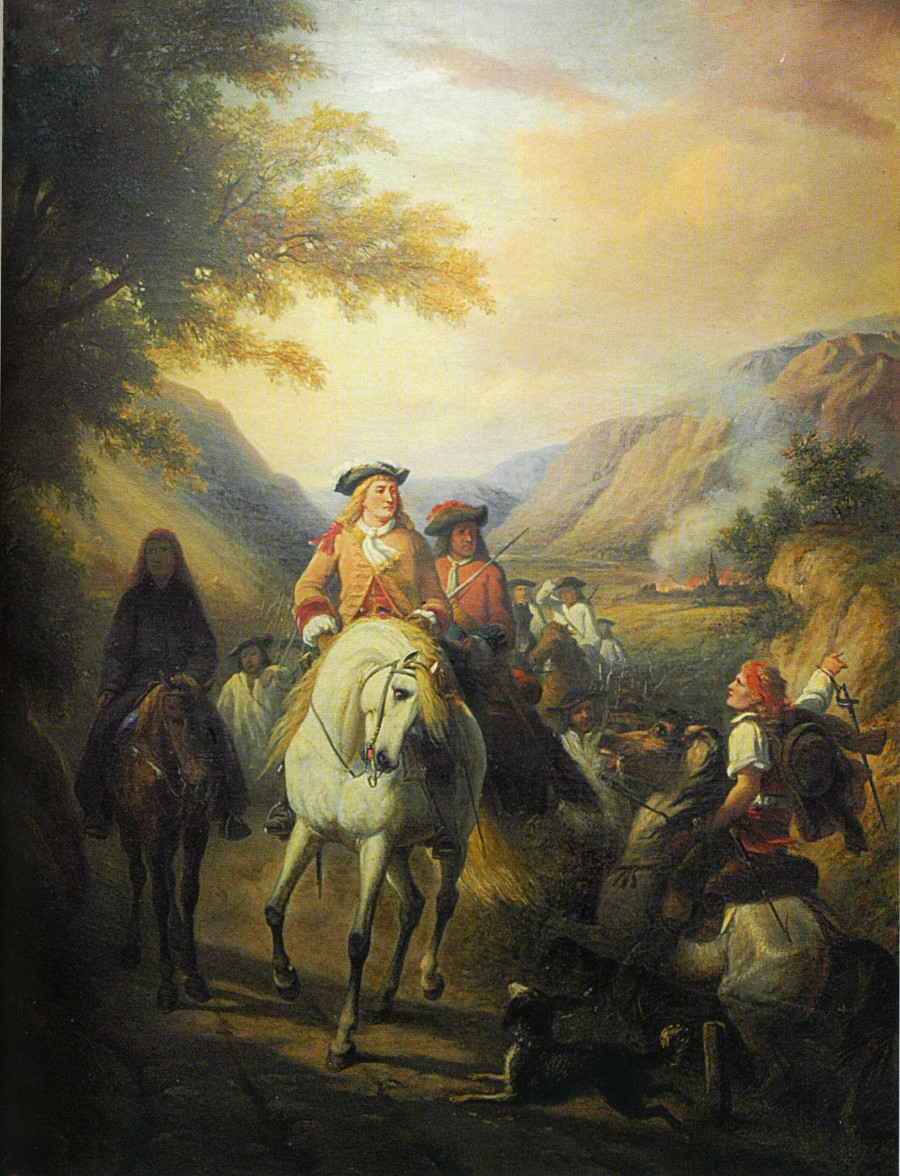
As one of the most influential figures in Byzantine mysticism and Orthodox church history, he is the rare exception in the early Middle Ages who placed a personal, empirical encounter with the Holy Spirit at the center of his theology. In his works *Hymns on Divine Love* and *Theological and Practical Chapters*, he writes about what happens to a person’s speech and language when they are filled with the Holy Spirit. When a person is flooded with the Divine Light (the Theoria), the mind and rational thought are completely overwhelmed by wonder. It is no wonder that his ecclesiastical name became Saint Symeon the New Theologian.
In this trance-like, ecstatic state, he believes that a person loses the ability to speak normally and articulately, and is unable to form coherent sentences; instead, they merely “stammer” before God, or cry out and praise Him in incomprehensible, rapturous tones. According to Symeon, through the new language following union with the Holy Spirit, the believer becomes capable of speaking about heavenly realities—things that cannot be expressed at all in earthly language. He does not yet speak of baptism in the Holy Spirit, and he limits this experience to the deepest solitude of the monastic cell, to being alone with God (hesychasm).
After several centuries of silence, the charism of speaking in tongues, which had flourished during the High and Late Middle Ages, reappeared in church history, though it continued to manifest itself as individual mystical experiences or within the context of persecuted movements.
The 10th and 11th centuries were characterized by the Cluniac Reforms (a movement to renew monasticism). It was during this time that the phenomenon of jubilatio spread, which refers to the spontaneous singing of worshipers—often breaking out in inarticulate melodies considered beautiful—as a result of hours-long prayers and Masses,
a phenomenon that contemporary theologians themselves called “the wordless language of the Holy Spirit.”
In the 12th century, Hildegard of Bingen, a German Benedictine abbess, was known for having received in her visions a language of her own (Lingua Ignota), with its own alphabet, which she used for her spiritual songs and writings. Many interpret this as glossolalia, though the codification of the language may cast some doubt on this. Similar mystical experiences were also reported in the cases of St. Gertrude of Eisleben and Mechtild of Magdeburg.
Early Franciscan sources from the 13th century (e.g., the Fioretti in The Little Flowers of St. Francis of Assisi) mention instances when Francis or his companions fell into ecstasy and began to sing and praise God in French or another language foreign to them. According to the hagiography of St. Anthony of Padua, at the Council of Limoges he spoke in such a way that people of various nationalities present there all understood him in their own languages.
At the secret gatherings of radical Franciscan groups (fraticelli) that had broken away from the Catholic Church, ecstatic experiences, prophecies, and shouting in foreign languages regularly occurred. The Inquisition systematically labeled these incidents as demonic possession or insanity, and often sent the participants to the stake.
Although the Waldensian movement was fundamentally biblical, ecstatic prophecies and prayers in unintelligible languages were recorded among their later groups who fled to the Alps to escape the Catholic Inquisition. Inquisition records mention captured Waldensians who prayed in a secret language amidst torture.
Some also attribute similar manifestations to the Rhineland mystics (the circle of Johannes Tauler and Meister Eckhart, the “Friends of God,” or Gottesfreunde). In the case of the 15th-century Dominican monk Vincent Ferrer, xenoglossia was recorded during his evangelization efforts. His contemporaries claimed that although he spoke only Valencian Catalan, his French, Italian, and German audiences understood his words perfectly, which they attributed to the gift of tongues, while critics see the explanation simply in the related dialects.
Most of the Reformers who ushered in the modern era took the position that the apostolic age had come to an end, and even certain radical factions, such as Thomas Müntzer or the “Zwickau Prophets,” who preached the direct revelation of the Spirit and the importance of prophecy, were not open to speaking in tongues.
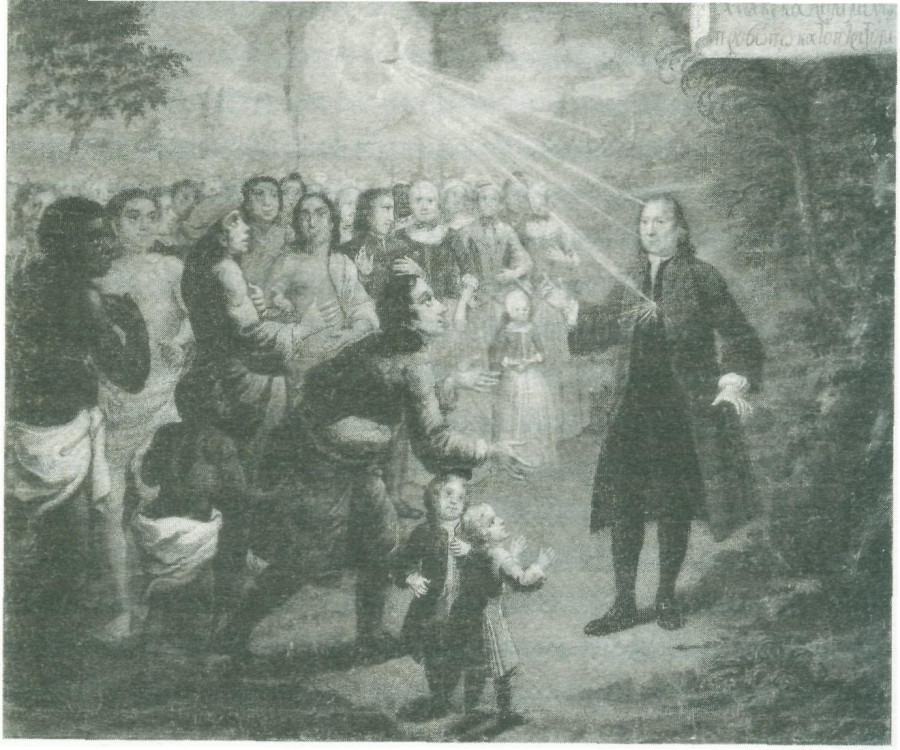
Among the French Huguenots persecuted to death by Louis XIV, however, there were communities—particularly the Camisards (“Prophets of the Cévennes”)—who, in their communities hiding in the mountains, practiced speaking in tongues and ecstatic manifestations very intensely. Even among children, experiences of mass rapture and prophecy were recorded, and both glossolalia and xenoglossia became widespread.
The French army eventually crushed their resistance; many of the surviving prophets fled to England, where they contributed to the later development of the Waggon Movement.
Powerful manifestations of the Holy Spirit were already evident among the first generation of Quakers, but unlike prophesying, praying in tongues had not yet become common practice. Under the leadership of Ann Lee, a group broke away from them in the second half of the 18th century; the Shakers became known for their ecstatic dancing and their intense practice of speaking and singing in tongues. Ann Lee and her followers, however, were repeatedly beaten and imprisoned in England, so they were forced to flee to America.
In 1727, a revival broke out in the Moravian Herrnhut Brotherhood, founded by religious refugees: the villagers, due to their different denominational backgrounds, argued day and night over doctrinal issues until, under the leadership of Count Nikolaus Ludwig von Zinzendorf, they signed a “Brotherhood Covenant” of mutual acceptance. The real breakthrough came during the Lord’s Supper service in Berthelsdorf on August 13, 1727, where,
according to those present, the Holy Spirit’s overwhelming presence filled the room, completely dissolving the previous anger, and people fell into each other’s arms weeping.
Although glossolalia did not become a regular practice among them, this charism did occasionally manifest itself.
The movement thus became one of the most important spiritual precursors of the modern charismatic renewal.
As a direct fruit of this spiritual experience, the villagers launched a 24/7 prayer chain—unique in world history—that continued uninterrupted for over a century, and it was from this continuous backdrop of prayer that the explosive rise of the modern Protestant world mission also began. This small community of just a few hundred people, consisting of refugees from Saxony, sent out hundreds of missionaries to every corner of the world within a few decades: to Greenland, North and South America, Africa, and Asia.
It was in the midst of a storm at sea that John Wesley, who became the founder of the Methodist revival after his conversion, witnessed the unwavering faith of those who were praying. At the open-air meetings led by Wesley and George Whitefield, people often fell under the power of the Spirit, cried out, or praised God in tongues. In his diary, Wesley defended these physical and spiritual manifestations.
The 19th-century charismatic revival began with the miracle of two Scottish women:
Mary Campbell and Margaret Macdonald both suffered from serious illnesses despite their young age, but after being filled with the Holy Spirit and beginning to speak in tongues, they were healed.
Edward Irving, the renowned London Presbyterian minister (whose congregation included members of Parliament and nobles), sent a delegation to Scotland to investigate the girls’ case. Irving believed that the glossolalia experienced by the girls was a true restoration of biblical charisms, and he allowed the phenomenon into his own London church. Many consider Irving’s Catholic Apostolic Church to be a precursor to the Pentecostal movement. This was, in fact, the first modern attempt at the institutional restoration of charismatic gifts. In Irving’s congregation, prophecy and speaking in tongues became common practice.
In the second half of the 19th century, the Holiness Movement—which grew out of Methodism and the revivals led by Charles Finney—established the direct theoretical framework that we still refer to today as Pentecostal theology. The “Latter Rain” movements of the turn of the century, which emerged from Pietist and Methodist circles in America and Europe (e.g., Germany), directly paved the way for the widespread spread of glossolalia.
The Pentecostal movement in America began in 1900 through Charles F. Parham, a young pastor in the Holiness Movement, who, leaving behind Methodist “rigidity,” set as his goal the restoration of the spiritual power of the early church as seen in the New Testament. After a thorough study of Scripture, he concluded that the gift of speaking in tongues was an indispensable accompaniment to the baptism of the Holy Spirit. They organized a communal prayer to ask for the filling of the Holy Spirit: the first believer, Agnes Ozman, received the gift of tongues on New Year’s Eve 1901, while Parham himself and several other students received it on January 3.
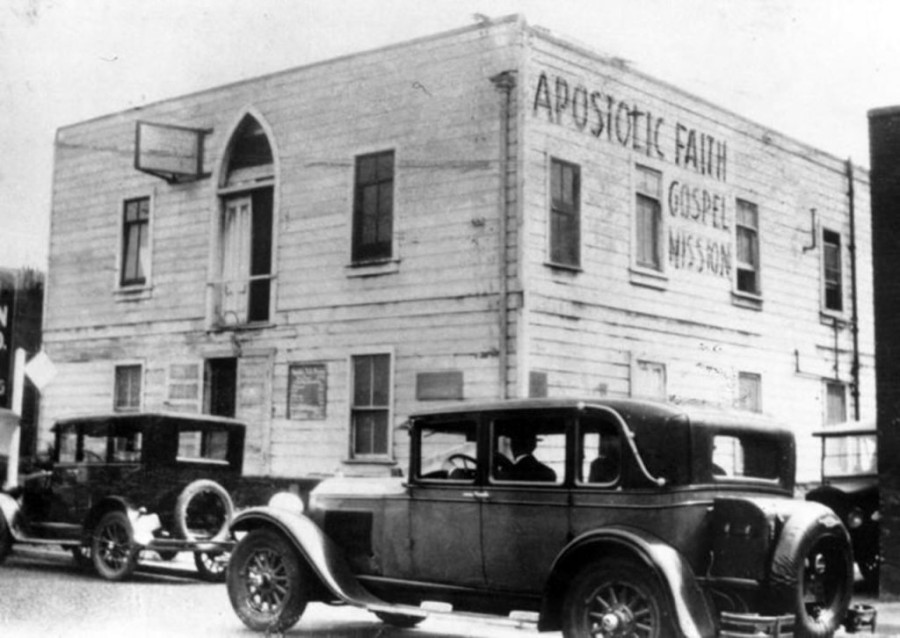
From this small core, a wave of revival began, first in Texas and then in California, one of the most famous milestones of which was the Azusa Street Revival that began in 1906. This movement in Los Angeles lasted three years and resulted in the filling of thousands in North America. This became the global focal point of the modern Pentecostal movement, when, under the leadership of an African American pastor, William J. Seymour, speaking in tongues, prophesying, and healing became commonplace, transcending racial and social barriers. Classic Pentecostal denominations such as the Assemblies of God grew out of this.
The following decades reshaped the dynamics of Christianity as it had been known up to that point, as the powerful outpouring of the Holy Spirit propelled the evangelical—and within that, the Pentecostal-charismatic—movements to the forefront of the fastest-growing and most popular Christian denominations. (At the same time, the work of the Holy Spirit was not confined to denominational boundaries, and charismatic manifestations soon began to emerge within traditional denominations. The Catholic charismatic movement also began in 1967, cautiously but effectively accepting the phenomenon of speaking in tongues. It is no coincidence that Catholic websites in Hungary are also increasingly discussing the blessings and necessity of speaking in tongues.)
Don Basham, who served alongside Derek Prince, described the global wave of revival at that time in 1973 as follows:
“The revival of our day is different from previous ones [e.g., the Reformation, Wesleyan, or Moody revivals] because it is not limited to a specific country and is not centered around a specific spiritual figure.”
(New Wine 1973/VI. 5.)
The evangelical magazine New Wine, published by the ministers in Fort Lauderdale, became one of the world’s most widely circulated Christian publications for several years precisely because of the popularity of the Holy Spirit’s work. The editorial staff concluded that the widespread manifestations of the Holy Spirit’s power prove that it was not God who had withdrawn the work begun at Pentecost, but rather that the majority of historical churches had lost touch with the early church and the powers manifested there.
Derek Prince believed that the growing interest in speaking in tongues since the 1960s was directly proportional to openness toward the baptism of the Holy Spirit. His ministry also provided significant impetus to the Hungarian revival that began in the 1970s, the most influential representative of which is the Hit Gyülekezete (Faith Church) founded by Sándor Németh.
Today, speaking in tongues is no longer a characteristic of isolated, marginal groups. Worldwide (especially in Africa, Latin America, and Asia), Pentecostal-Charismatic Christianity remains the fastest-growing movement, where speaking in tongues is practiced by hundreds of millions of believers as part of their daily spiritual life.


_bff800a6.jpg)





Igehasználat és erkölcsi határok: A politikai retorika teológiai olvasatban
„Az Úr nevét hiába fel ne vedd!” »
A német gazdasági modell válsága: Hitelből finanszírozott növekedés és a szavazó...
Akadoznak a fogaskerekek »
A PISA-mérések üzenete: Miért hanyatlik az európai diákok teljesítménye, és mi a...
Kiből lehet éllovas? »




Seres László: 9/11 és a „végtelen háború” mítosza
Véleménycikk »
Fékek és ellensúlyok nélkül: Miért kellenek korlátok a „jó embereknek” is?
A szubjektív hangulatok és a racionális érvek hiánya rossz tanácsadó az államszervezet átalakításánál »
A Pride titkolt eredete
A melegmozgalom programját évtizedekkel ezelőtt megírták »
Seres László: 9/11 és a „végtelen háború” mítosza
Véleménycikk »
Fékek és ellensúlyok nélkül: Miért kellenek korlátok a „jó embereknek” is?
A szubjektív hangulatok és a racionális érvek hiánya rossz tanácsadó az államszervezet átalakításánál »
A Pride titkolt eredete
A melegmozgalom programját évtizedekkel ezelőtt megírták »